Few things stop you in your tracks like walking downstairs and finding dirty water bubbling up from a floor drain or overflowing a basement toilet. A sewage backup is stressful, it smells awful, and it raises real health concerns for everyone in the house. Sewage backup cleanup in Evansville is not the same as mopping up a leaky water heater. The water carries bacteria and other contaminants, so the goal is not just to get it out, but to make the space safe to live in again. This guide walks you through what to do first, what to avoid, and what a proper cleanup looks like.
Why sewage backups happen in Evansville homes
Evansville sits along the Ohio River, and a lot of homes here have basements, crawl spaces, or lower levels that sit below the main sewer line. When something goes wrong in the line, the lowest drain in the house is usually where the trouble shows up first. Some of the most common causes we see include:
- Heavy rain overwhelming the city sewer system and pushing water back toward homes
- Tree roots growing into older clay or cast iron sewer lines
- Grease, wipes, and debris building up until the line clogs
- Aging or collapsed pipes in older neighborhoods
- Basement floor drains reversing flow during a storm
- Septic system problems for homes outside city service
What to do first after a sewage backup
Your safety comes first. Sewage water can contain bacteria, viruses, and parasites, so the less contact you have with it, the better. Before help arrives, a few simple steps can protect your family and limit the spread:
- Keep kids and pets away from the affected area
- Stop running water, flushing toilets, and using the washer or dishwasher if you can
- Stay out of standing water, especially near outlets or appliances
- Turn off the HVAC system so it does not pull contaminated air through the house
- Take photos and video of the damage before anything is moved or thrown out
- Call your insurance company to report the backup and ask what they need from you
What not to do
It is natural to want to grab a mop and get it over with, but well-meaning cleanup can make things worse. A household shop vac is not built for contaminated water and can spread it around. Bleach may make a floor look cleaner, but it does not address contamination that has soaked into drywall, carpet pad, or wood. Walking back and forth through the area can also carry contamination into rooms that were never touched. If you are not sure, leave it alone and let a trained crew handle it.
How professional sewage backup cleanup in Evansville works
Every backup is different, but a thorough sewage backup cleanup in Evansville generally follows the same core steps. Our team handles them as one connected plan so you are not left guessing what comes next.
Containment and protective equipment
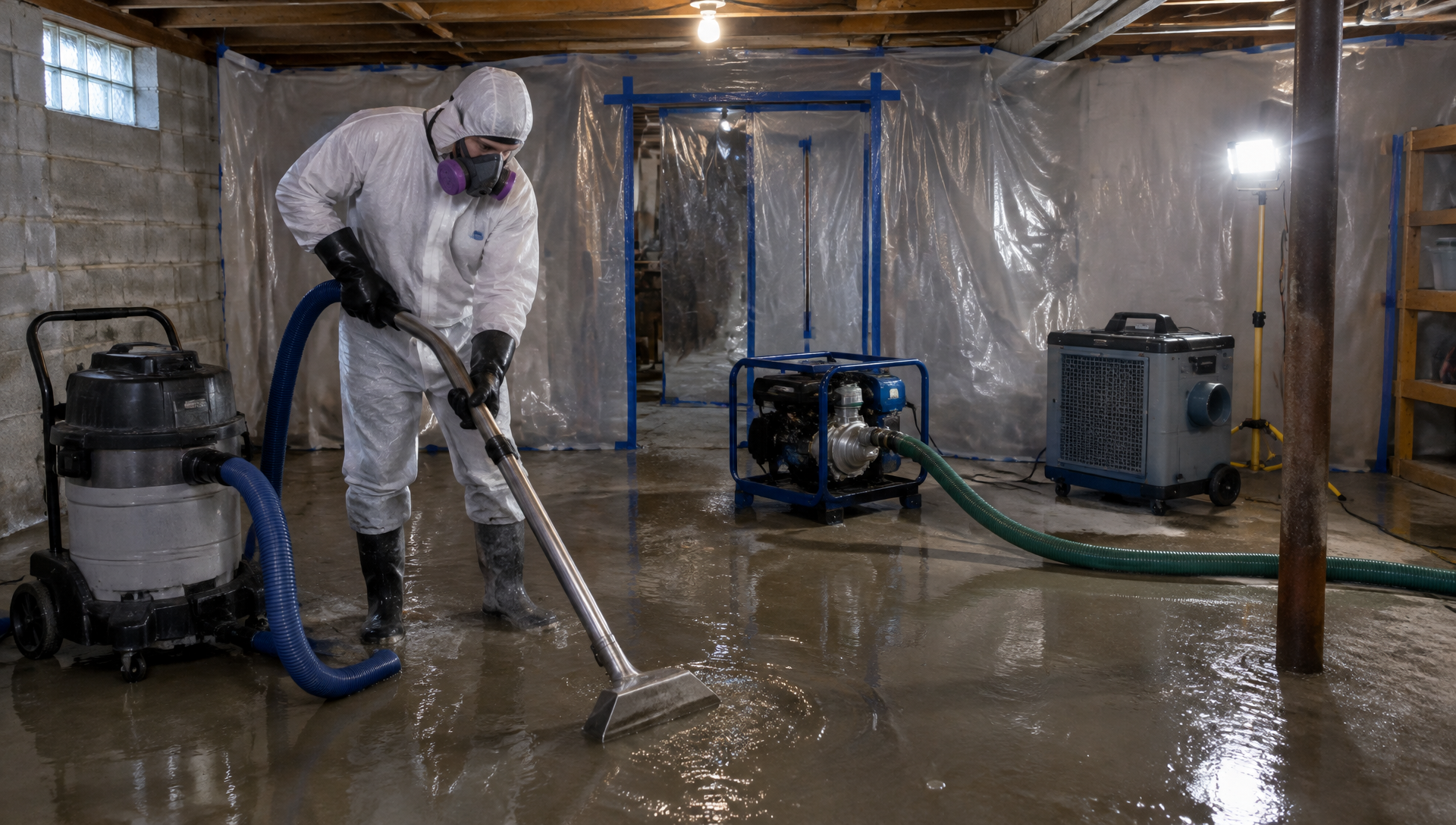
Technicians arrive in protective gear and seal off the affected area so contamination does not spread into clean parts of the home. This is one of the biggest differences between a professional job and a weekend attempt.
Extraction and removal
Standing sewage and solid waste are removed with equipment made for contaminated water. Porous materials that soaked up sewage, like carpet, padding, insulation, and the lower parts of drywall, often cannot be safely cleaned and are removed and disposed of properly.
Cleaning, disinfecting, and drying
Hard surfaces that can stay are cleaned and disinfected. Air scrubbers with HEPA filtration help with airborne particles and odor. Then the structure is dried with air movers and dehumidifiers, and moisture readings track progress so drying is based on real measurements instead of guesswork. If the backup soaked a large area, our water damage restoration team handles the structural drying as part of the same job.
Repairs and rebuilding
Once the area is clean and dry, the materials that were removed can be put back. That may mean new drywall, flooring, baseboards, and paint so your basement or lower level feels like home again.
Fixing the cause and preventing mold
Cleanup handles the mess, but the line itself still needs attention. A qualified plumber can find out whether roots, a clog, or a damaged pipe caused the backup. Our earlier post on the warning signs your sewer line is about to back up covers the red flags to watch for, and our article on why heavy rain can trigger a sewage backup explains what happens in the lines during a storm.
Moisture left behind after a backup can also lead to mold, especially in basements and crawl spaces. If you notice a musty smell weeks later, our mold remediation team can take a look. We also wrote about crawl space mold remediation in Southern Indiana, since many Evansville homes have damp spaces under the floor.
Why sewage is a health concern
Sewage is considered the most contaminated type of water in a home. It can carry germs that cause stomach illness and other problems, and people with weaker immune systems, young children, and older adults are more vulnerable. Our post on sewage backup health risks every homeowner should know goes deeper into what is in the water and why proper cleanup matters.
What about insurance?
Sewage backup coverage varies a lot from one policy to the next. Some homeowners policies do not include it at all unless you added a sewer or water backup endorsement, and limits can be lower than people expect. Call your insurer early, write down your claim number, and keep every photo and receipt. Our team documents the damage and the work performed and can communicate with your adjuster, but your insurance company makes the coverage decision.
Local sewage backup cleanup for Evansville and Southern Indiana
911 Restoration of Southern Indiana helps homeowners in Evansville and across the region, including Newburgh, Boonville, Mount Vernon, Chandler, Princeton, Jasper, and the surrounding communities. If a sewage backup is part of a bigger loss, we also handle fire damage restoration, so one team can look at the whole house. Whether it is a single floor drain or a full basement, our team can assess the damage, explain what we find in plain language, and lay out a plan to clean, disinfect, dry, and restore your home.
If you need sewage backup cleanup in Evansville, call 911 Restoration of Southern Indiana at 812-631-2171. We answer 24/7, every day of the year.
Frequently Asked Questions
Can I clean up a small sewage backup myself?
Even a small backup can leave contamination on surfaces and in porous materials you cannot see. Household cleaners and shop vacs are not designed for sewage, so it is safer to have a trained crew assess it before you start.
Is it safe to stay in my house after a sewage backup in Evansville?
It depends on where the backup happened and how far it spread. Keep everyone away from the affected area, avoid using plumbing until the line is checked, and ask your restoration team for guidance once they see the damage.
Does homeowners insurance cover sewage backup cleanup?
Coverage varies by policy. Many policies only cover sewer backups with an added endorsement, and some exclude them, so check with your insurer and keep photos of the damage.
Need help now?
24/7 emergency response across Southern Indiana. On-site in 60 minutes.