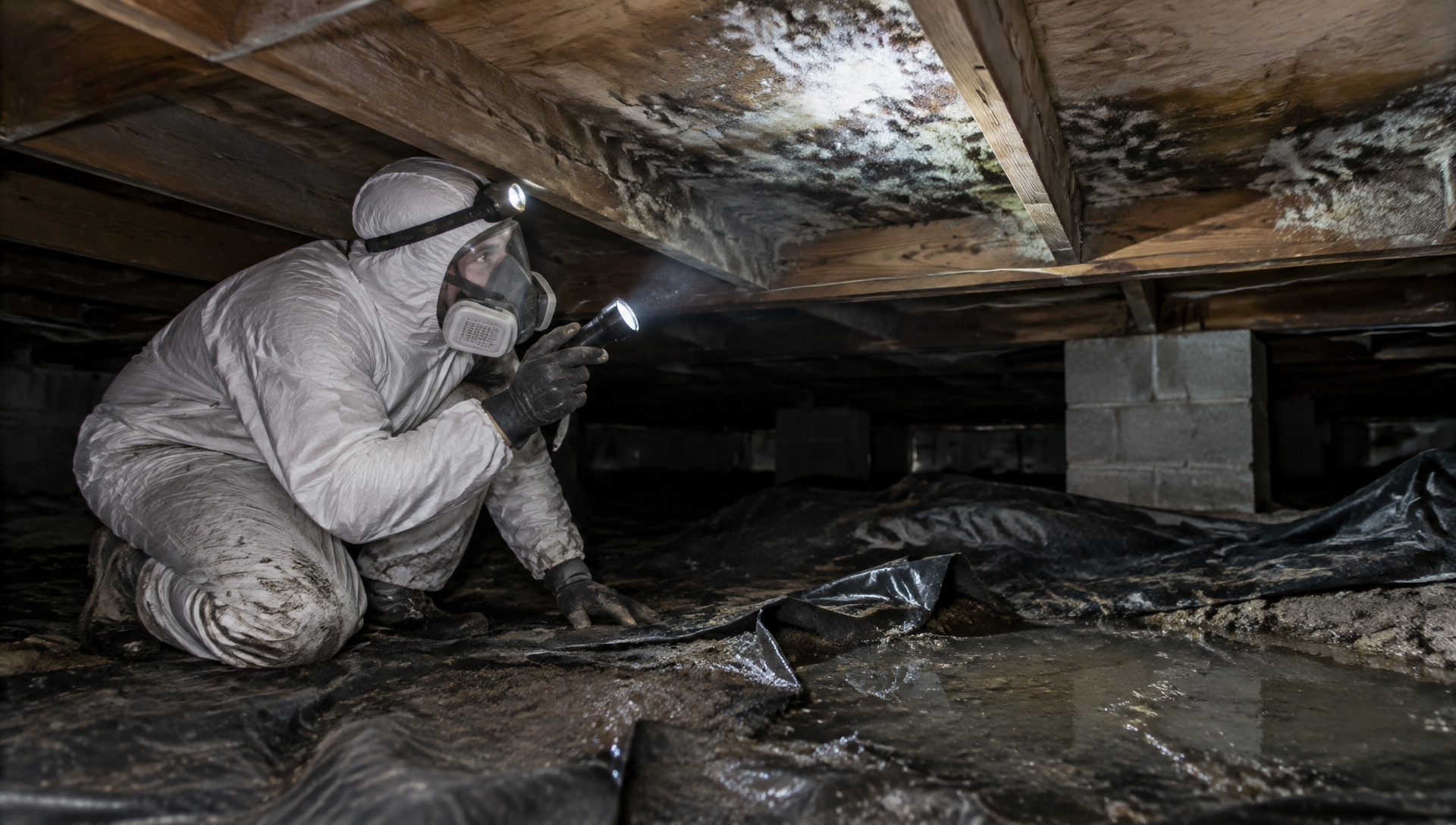
Most people never go into their crawl space unless something forces them to. That is exactly why mold can grow down there for months without anyone noticing. If your floors smell musty, a room above feels damp, or a contractor mentioned fuzzy spots on the joists, it may be time to look into crawl space mold remediation in Southern Indiana. Here is what causes it, what to watch for, and what a proper cleanup should include so the problem does not keep coming back.
Why crawl spaces in Southern Indiana are prone to mold
A crawl space is a dark, enclosed area that sits close to the soil. Add moisture and organic materials like wood joists, subflooring, and paper-faced insulation, and you have nearly everything mold needs. Homes in Evansville, Newburgh, Mount Vernon, and other towns along the Ohio River deal with humid summers and wet springs, and that moisture tends to settle in the lowest, least ventilated part of the house.
The soil itself is part of the story too. Clay-heavy ground holds water after heavy rain, and that moisture can evaporate up into an unsealed crawl space. Over time, the wood absorbs it, the humidity stays high, and growth begins on surfaces nobody looks at.
Common sources of crawl space moisture
Mold is really a moisture problem first. Before any cleanup makes sense, someone needs to figure out where the water is coming from. Some of the most common sources we see include:
- Plumbing leaks from supply lines or drain pipes running under the floor
- Groundwater or surface water seeping in after storms
- Gutters and downspouts dumping water right next to the foundation
- Condensation on ductwork, pipes, or cold surfaces during humid months
- Missing, torn, or poorly installed vapor barriers over bare soil
- Leftover moisture from a past flood or sewage backup that was never fully dried
Signs you may need crawl space mold remediation
You do not have to crawl under the house to suspect a problem. Mold in a crawl space often shows itself in the rooms above, because air from below naturally moves up into the living space. Watch for these clues:
- A musty or earthy smell that is strongest near floors or floor vents
- Allergy-like symptoms that seem worse when you are at home
- Floors that feel soft, spongy, or slightly uneven
- Sagging or falling insulation under the house
- Visible white, gray, green, or black growth on joists or subflooring
- Standing water, damp soil, or condensation when you open the access door
Why DIY cleanup usually falls short
It is tempting to grab a spray bottle and a flashlight and handle it yourself. The trouble is that crawl spaces are cramped, hard to see in, and full of porous materials. Spraying bleach on wood may change the color of the surface, but it does not address growth that has worked into the material, and it does nothing about the moisture causing it.
Scrubbing or scraping without containment can also send spores into the air, and that air can make its way into your HVAC system and living areas. Wet insulation and debris have to be bagged and removed carefully. For most homeowners, the safer move is to have a professional assess the space before anything gets disturbed.
What professional crawl space mold remediation includes
Every crawl space is different, but a thorough remediation generally follows the same core steps that 911 Restoration of Southern Indiana uses on all of its mold projects.
Inspection and moisture mapping
Technicians start by looking at the full picture. Moisture meters and thermal imaging help show where wood and insulation are holding water, and where growth may be hiding. This step also points to the likely moisture source, which matters as much as the mold itself.
Containment and air filtration
Before removal begins, the work area is sealed off so spores are not pushed into the rest of the home. HEPA air scrubbers run during the process to capture airborne particles. This is one of the biggest differences between a professional job and a weekend attempt.
Removal, cleaning, and treatment
Damaged insulation, debris, and materials that cannot be cleaned are removed and disposed of. Structural wood that can stay is cleaned and treated with antimicrobial products. The goal is to remove the growth, not just cover it up.
Drying and fixing the cause
Once the mold is addressed, the space needs to be dried and the moisture source corrected. That may mean repairing a leak, improving drainage, or replacing a damaged vapor barrier. If the moisture came from a recent leak or storm, professional water damage restoration can handle extraction and structural drying. Without this step, mold has a good chance of returning.
Crawl space mold, sewage, and fire: when problems overlap
Crawl space mold does not always start on its own. A basement or under-floor sewage backup that was not properly cleaned can leave contaminated moisture behind, and that calls for sewage backup cleanup before mold work begins. Homes that went through a fire may also have soaked framing from firefighting water, which is why fire damage restoration includes drying as part of the plan. Treating the full history of the space helps make sure nothing gets missed.
What about insurance?
Whether your policy helps with mold depends heavily on what caused it and how your policy is written. Mold tied to a sudden, accidental water event is treated differently than mold from long-term humidity or slow leaks, and many policies limit or exclude mold altogether. Call your insurer, ask what they need, and keep photos and moisture records. Our team provides documentation of the damage and the work performed, but your carrier makes the coverage decision.
Get help with crawl space mold anywhere in Southern Indiana
911 Restoration of Southern Indiana serves homeowners in Jasper, Evansville, Newburgh, Boonville, Tell City, Princeton, Vincennes, Mount Vernon, Petersburg, Chandler, and the surrounding communities. Whether you just noticed a musty smell or you already found growth on the joists, our team can assess the crawl space, explain what we find in plain language, and lay out a plan to remove the mold and stop the moisture behind it.
If you are dealing with a musty smell, damp floors, or visible growth under your home, call 911 Restoration of Southern Indiana at 812-631-2171 for crawl space mold remediation in Southern Indiana. We answer 24/7, every day of the year.
Frequently Asked Questions
Can mold in my crawl space affect the air inside my home?
It can. Air from a crawl space often moves upward into the living areas, which is why many homeowners first notice a musty smell inside the house rather than under it.
Will a dehumidifier get rid of crawl space mold?
A dehumidifier can help control humidity, but it does not remove existing growth. The mold needs to be properly cleaned or removed and the moisture source corrected.
Does homeowners insurance cover crawl space mold remediation?
Coverage varies by policy and cause. Mold from a sudden water event may be treated differently than mold from long-term moisture, and many policies limit or exclude mold, so check with your insurer.
Need help now?
24/7 emergency response across Southern Indiana. On-site in 60 minutes.